Innovation: Reshaping the NMIBC Care Continuum
NMIBC is often defined by repeated cycles of evaluation, recurrence, and intervention that can span many years. Improving outcomes for patients requires more than a single therapeutic breakthrough—it requires progress across the entire disease management pathway. Today, advances in detection, diagnosis, surveillance, and treatment are collectively reshaping how NMIBC is managed and monitored.1-3
Key Areas of Progress in NMIBC Care

Innovation across the care pathway: Advances in NMIBC management are occurring across multiple stages of care—from improved detection and diagnostic tools to evolving surveillance strategies and new therapeutic options.1-3

A more coordinated approach to progress: Together, these developments reflect a broader shift in NMIBC care. Improvements in visualization, pathology, surveillance, and therapy are working in concert to improve outcomes and support more personalized, patient-centered approaches to disease management.1-3
Enhancing Visualization in NMIBC Detection
Accurate visualization is critical to detecting bladder tumors and achieving a complete resection during transurethral resection of bladder tumor (TURBT). While white-light cystoscopy remains the standard approach, enhanced visualization technologies are helping clinicians identify lesions that may otherwise be difficult to detect.4
- Current gold standard for visualizing bladder tumors during diagnosis and TURBT5
- Also known as fluorescence cystoscopy or photodynamic diagnosis5
- Enhances visualization of bladder tumors during cystoscopy5
- Improves detection of lesions not visible with white light5
- In a phase 3 study, 21% of intermediate or high-risk NMIBC tumors were identified only via BLC5
- Improves the visualization of small, flat, or otherwise difficult-to-detect lesions6-7
- No specialist equipment required, or dye instillation8
 Not an actual physician interaction.
The Central Role of Pathology in NMIBC Care
Accurate pathology is foundational to NMIBC management. Pathologic evaluation informs tumor staging, grading, and risk stratification—factors that directly influence treatment selection, surveillance intensity, and eligibility for certain therapies.1,10
However, assessing clinical and pathologic features can involve a degree of interpretation, subjectivity, and variability between pathologists, which can affect diagnostic consistency. Inaccurate initial pathology results may lead to differences in staging or grading, which can influence the treatment path or restrict access to potentially impactful treatments.11,12
Supporting Pathologists with AI-assisted Analysis
By providing additional analytical insights, AI-assisted tools may help improve diagnostic consistency and strengthen the accuracy of risk stratification used in clinical decision-making.13
AI is emerging as a tool to:
- Help improve the reproducibility and consistency of pathological evaluation
- Analyze complex tissue patterns, segment regions of interest, and identify neoplastic areas
- Assist with grading and staging assessments of bladder cancer specimens
Moving Beyond Traditional Cytology
Although cystoscopy remains the gold-standard tool for surveillance in NMIBC,4 evolving developments in cytology may soon help complement or even reduce the frequency of cystoscopy-based surveillance.1 This could minimize the negative impact of invasive surveillance on patient quality of life.14
Newer biomarker tests (such as NMP22 or BTA) or more advanced genetic and epigenetic panels may improve test sensitivity.4
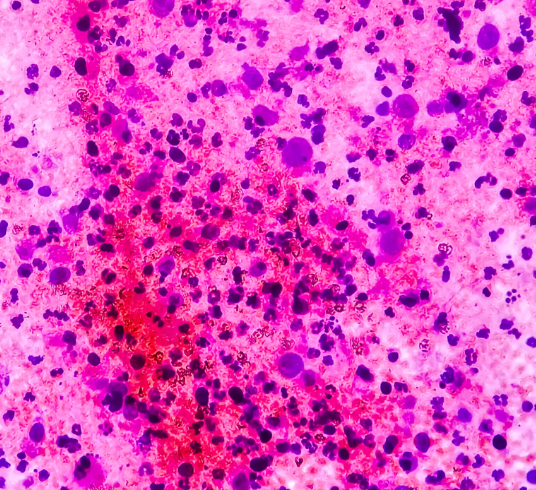

Increasing Sensitivity of Urine Testing with Biomarkers
Developments in cytology have yielded several FDA-approved approaches to improve detection sensitivity. These approaches are less like traditional cytology and more like liquid biopsy and biomarker testing.15 Currently available FDA-approved urinary biomarker tests demonstrate sensitivities in the range of ~60%–80%, while newer genomic assays under development are approaching sensitivities greater than 90%.1
As these technologies continue to evolve, they may help clinicians detect disease recurrence earlier and potentially complement, or in some cases reduce, the frequency of cystoscopy-based surveillance—minimizing the impact to patient quality of life from invasive disease surveillance.
Exploring New Approaches in Intravesical Therapy
Intravesical therapies can be effective in NMIBC but may be limited by the bladder environment itself. Because these treatments are delivered directly into the bladder, dwell time can be short, and passive diffusion and dilution may reduce urothelial exposure to therapeutic agents, potentially limiting antitumor activity.16,17
Emerging treatment strategies are expanding bladder-preserving options by improving both the delivery and the mechanism of action of intravesical therapies.3
- Novel drug-delivery systems are being developed to increase the residence time of intravesical therapies within the bladder. Sustained-release devices, for example, use semi-permeable materials to release medication osmotically over several weeks, helping improve local drug retention and urothelial exposure
- Other approaches explore ways to increase bladder permeability, which may enhance the penetration and retention of therapeutic agents within the urothelium
- Studies evaluating these strategies are beginning to show promise in patients with NMIBC